
2026

Care not Cages: Involuntary Detox Treatment is Carceral Colonialism in Winnipeg, MB

Manitoba’s Bill 48 empowers police to target individuals of perceived drug intoxication and detain them for 3 days in solitary confinement. How does the expansion of involuntary detention and forced detox, made possible through Bill 48, deepen colonial harm? In this Brief, Sage Broomfield and Sidney Leggett argue that Bill 48 advances carceral colonialism under the guise of care – expanding police power, sanctioning confinement and displacing Indigenous-led harm reduction with punitive, ineffective, and life-threatening interventions.

Care not Cages: Involuntary Detox Treatment is Carceral Colonialism in Winnipeg, MB Read More »

The New Impact Assessment Regime: Cooperation Agreements, the Return of Provincial Power & Discretionary Indigenous Rights

Following Canada’s push for accelerated resource development, new “Cooperation Agreements” between the federal and provincial governance promise faster approvals for industry. In this Brief, Hayden King examines these agreements and finds that there are trade-offs for efficiency and coordination. This approach hands more authority to provincial governments, many already facing criticism for weak environmental oversight and inadequate consultation with Indigenous communities, and raises concerns about how Indigenous rights will be respected when the federal government abdicates its responsibilites.

The New Impact Assessment Regime: Cooperation Agreements, the Return of Provincial Power & Discretionary Indigenous Rights Read More »

The Prison as Reconciliation? Considering the “Indigenization” of Carceral Spaces in Canada

In this Brief, Ashley Kyne and Justin Piché challenge the “Indigenization” of prisons – often framed as collaborative initiatives with Indigenous communities – arguing that these efforts reproduce colonial space through carceral policies to create ‘culturally meaningful spaces’ that misrepresent Indigenous histories, worldviews, and lived realities, normalizing confinement .

The Prison as Reconciliation? Considering the “Indigenization” of Carceral Spaces in Canada Read More »

Sovereignty and The Indigenous Screen Office: A Proposal to Reshape Canada’s International Cultural Strategy

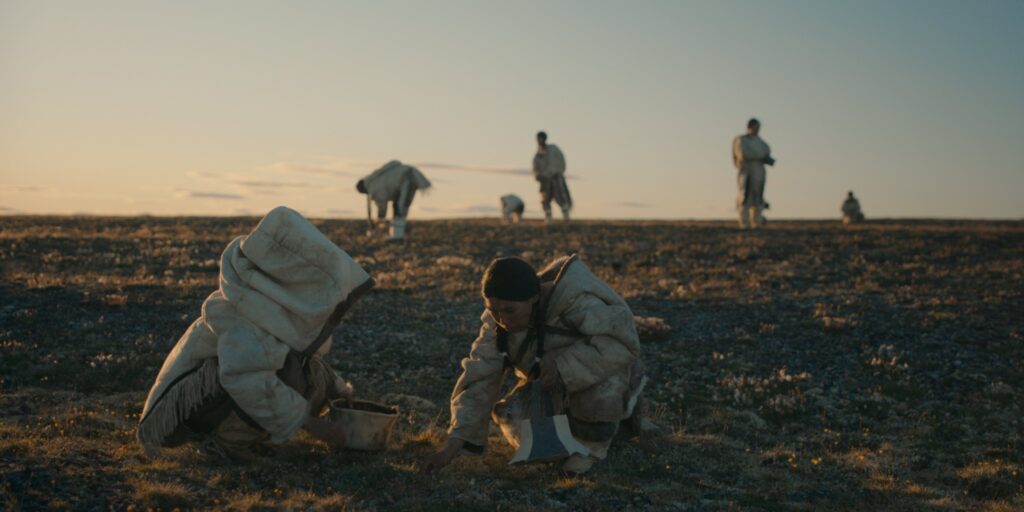
In this Brief, Anton Clark highlights the role of the Indigenous Screen Office (ISO), which was built on decades of Indigenous advocacy, to enact these principles by supporting Indigenous creators and shaping international diplomacy and the circulation of their stories.

Sovereignty and The Indigenous Screen Office: A Proposal to Reshape Canada’s International Cultural Strategy Read More »

Reflections on “Rupture”: Mark Carney’s New World Order & an Indigenous Response

Prime Minister Mark Carney’s speech in Davos earlier this month received a rare standing ovation from the World Economic Forum. But in his comments to build an alternative system, insulated from great powers, he inadvertently described the Crown-Indigenous relationship, echoing the long-standing dynamics of power and exclusion that shape that relationship. In this Brief, Janna Wale and Michaela M. McGuire (Jaad Gudgihljiwah) expose this connection and ask what this means for Indigenous Peoples (who have long demanded a seat at the table – as opposed to being on the menu) to create a different kind of rupture in our own relationships, within and among Indigenous nations.

Reflections on “Rupture”: Mark Carney’s New World Order & an Indigenous Response Read More »

Is Kalaallit Nunaat for Its People? Inuit Reflections on American (and Danish) Colonization

Kalaalliit Nunaat (so-called Greenland) is once again at the centre of global geopolitics — amid renewed American imperialism and fraying international alliances. But as states debate power, territory, and security, Inuit voices are once again pushed to the margins.
In this Brief, Vivi Vold and Kunku Inutiq ask an urgent question – where are the voices of Kalaallit?

Is Kalaallit Nunaat for Its People? Inuit Reflections on American (and Danish) Colonization Read More »