
harm reduction

Care not Cages: Involuntary Detox Treatment is Carceral Colonialism in Winnipeg, MB

Manitoba’s Bill 48 empowers police to target individuals of perceived drug intoxication and detain them for 3 days in solitary confinement. How does the expansion of involuntary detention and forced detox, made possible through Bill 48, deepen colonial harm? In this Brief, Sage Broomfield and Sidney Leggett argue that Bill 48 advances carceral colonialism under the guise of care – expanding police power, sanctioning confinement and displacing Indigenous-led harm reduction with punitive, ineffective, and life-threatening interventions.

Care not Cages: Involuntary Detox Treatment is Carceral Colonialism in Winnipeg, MB Read More »

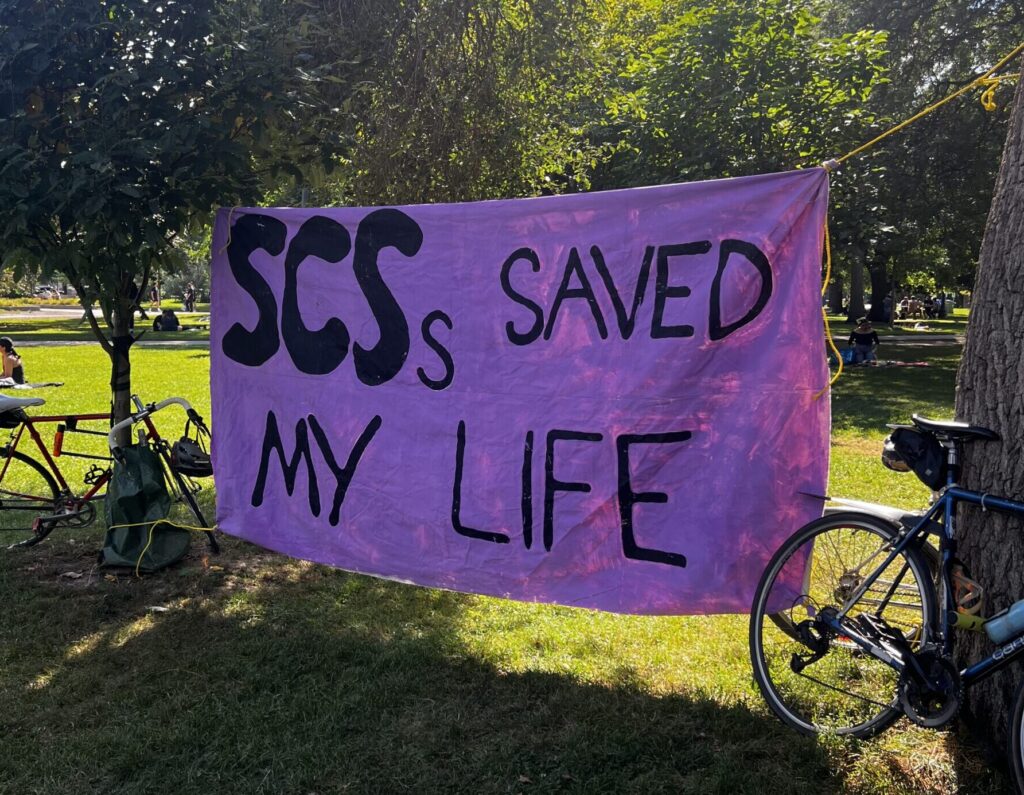
Safety for Whom? Ontario’s War on Safe Consumption Sites is No Act of Care

On December 4, 2024, amendments to the Community Care and Recovery Act within Bill 223 received Royal Assent in the Ontario legislature. This move, made without expert or public consultation, will significantly impact the operation of Supervised Consumption Sites (also known as Safe Consumption Sites, or SCSs) in Ontario and, by extension, the safety of

Safety for Whom? Ontario’s War on Safe Consumption Sites is No Act of Care Read More »

Opioid Crisis Devastates Indigenous Communities in Canada

This investigation was done in collaboration with ICT (formerly Indian Country Today), presenting data obtained from the First Nation and Inuit Health Branch of Indigenous Services Canada (FNIHBISC) for 2024. Read ICT’s story. Natalya Kate Chaylene Keeshig-Lisk was born in the spring of 2000, at the start of an Indigenous baby boom that swept through

Opioid Crisis Devastates Indigenous Communities in Canada Read More »