Content Warning: This Brief describes violence and abuse that took place during and after the Indian Residential School System. The content is difficult and it may be upsetting. Read with care.
–
“There’s not a single Indigenous person in Canada, who has not been touched by the legacy of Residential Schools.” – Justice Murray Sinclair, Chair of the Truth and Reconciliation Commission (TRC)
I WAS IN the room in 2015 when the late Justice Murray Sinclair stood at a podium at the final event of the Truth & Reconciliation Commission (TRC) and said those words. The TRC commissioners were releasing their 94 Calls to Action, a roadmap to reconciliation for Canada and I was there reporting for CBC News.
I believed what Justice Sinclair said; he and the other Commissioners had just spent the last six years, travelling across the country to hear the stories of Survivors. But if I am honest, at the time, I didn’t really know or understand how my own life had been shaped by my family’s experience in residential school.
It wasn’t until years later when I learned that my late father Howard Cameron was sexually abused by a priest when he was a boy at Residential School, that I began my own journey of understanding.
I wasn’t close to my dad. My parents split up when I was seven years old and I think at the time, I mostly felt relief. The father I remember from my childhood was angry and violent, and the memories I have of him, kept me at a distance from him my whole life.
But learning about what had happened to him when he was a boy at residential school unlocked some empathy and curiosity. It made me want to get closer and to understand him better. It also made me realize how little I knew about my dad’s childhood. I knew that he had gone to a residential school but I didn’t know where he went, or for how long, and I never really thought about how what happened to him there might have affected the father that he was to me.

Fig. 1: Cover image for Stolen: Surviving St. Michael’s podcast
So I decided to investigate the residential school my dad went to and see if I could find the priest who abused him.
It was the beginning of what turned out to be a year-long investigation documented in our podcast Stolen: Surviving St. Michael’s, where our team uncovered a shocking level of abuse at the St. Michael’s Indian Residential School in Duck Lake, Saskatchewan.
The Independent Assessment Process
In the very first interview I did for the podcast, I learned the name of a Catholic priest that my dad’s brother, Ivan Cameron, had accused of sexual abuse: Father Gilles Gauthier. I learned Gauthier was a principal at St. Michael’s and he was there at the same time as my dad was. I found a newspaper article from the Edmonton Journal, featuring Father Gauthier and a local boxer, who were both working with ‘natives in Hobbema’ in 1989. The long profile covers his childhood in Quebec and his career as a priest (including his time at St. Michael’s and later in Bangladesh working with Mother Theresa) but it was a quote near the beginning I found most interesting. Gauthier was explaining his views on non-violence and recalled a conversation he had when ministering to people in prison.
“Like, the guys in the penitentiary, I said to them: “I would rather be a sissy and be free than to have lots of muscles and be behind bars. I have no muscles but I am free. The Father pauses. “I told them also, ‘Maybe I should be in here also. But I never got caught!”
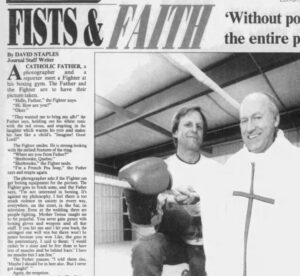
Fig. 2: Clipping from the Edmonton Journal, February 5, 1989
Could Gauthier be the priest who abused my father? I learned that my dad never told anyone in my family the name of the priest who abused him; but he likely had to disclose it when he applied for compensation, as part of the Indian Residential School Settlement Agreement (IRSSA).
More than 38,000 survivors applied for compensation for residential school abuse through the Independent Assessment Process (IAP) and the records produced in their claims make up the most comprehensive archive that exists of Survivor testimony — five times the number of Survivors applied to the IAP than gave testimony to the TRC.
To apply for the IAP, Survivors first had to fill out an application form and to describe in detail the abuse they experienced in residential school. They were also compelled to name their alleged abusers. Though, if they were not able to, they were warned that they may not get an IAP hearing.
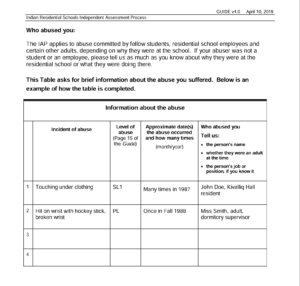
Fig. 3: Excerpt of IAP application form
If their application was accepted, Survivors were given a date for a hearing with an adjudicator, where they had to testify in great detail about their abuse.
In his book, Broken Circle, The Dark Legacy of Indian Residential Schools: A Memoir, the late Theodore Fontaine described his IAP hearing. It lasted over 8 hours:
“I turn the handle, open the door and slowly step into the room. I am almost overcome with panic. My eyes can’t stop darting around various parts of the room and I feel a deep stab of fear. I almost turn around and walk back out. This is eerily similar to what I experienced when I was a seven-or eight year old boy and heard Father P. directing me in a commanding, low whisper, “Come in, tci-ga (little boy).”
Fontaine writes that he asked for a hearing far from his community. He didn’t want the pain of those memories associated with his home. . Inside the room, he had a friend and Elder Barney Williams for support as the government adjudicator presided over the hearing.
“The adjudicator’s questions become even more vivid and probing. The abuse I have endured in this particular incident has never been discussed except superficially, and never as graphically as in this moment. My anger and frustration must be obvious as I struggle to remain in my seat. I fight off a frantic urge to grab and slam the water jug, and whatever else is on the table, against the wall. In her wisdom, the adjudicator suggests that this would be a good time to have a break. I’m overwhelmed by emotion and fear I’m having some kind of attack and will collapse before we’re done. I push back from the table and stagger to my feet. The floodgates open and I try mightily to hold back tears and sobs.
Barney is standing beside me, helping me up and guiding me to the door. It opens to the waiting area; the bright daylight hits my eyes, and I reach for my wife as she flies from the waiting area to hold me in her arms. I can’t envision how I look, and only realize later that this ordeal is nothing I have experienced before. It has touched my wife, her soul and consciousness, as deeply as it has mine. She’s frightened. Confronting this particular incident of abuse aloud has painted shock and horror all over me. My face is burning and I’m blind with tears. I’m shaking and falling. Never did I imagine that this hearing would create such panic in me.”
The Scale and “Levels” of Abuse
Survivors were promised that testimony in IAP hearings would remain confidential. So very little information from the IAP has ever been made public. But through their testimonies, the IAP Secretariat knows about the scale of abuse at every single residential School that was covered by the Settlement Agreement. They know what kind of abuse happened, they know how many people were accused of abusing kids and they know the names of alleged abusers.
When my dad sent in his application, if he had named his abuser, the priest and the Oblates of Mary Immaculate (OMI) would have been notified. In February 2016, investigative journalist Martha Troian reported that the IAP records include the identities of over 5,000 alleged abusers; each tracked down, sometimes by private investigators. One of my uncles believed that when he named Father Gauthier as his abuser in his IAP hearing, that it would trigger a criminal investigation. But the IAP only tracked down alleged abusers to invite them to participate in the process and be given a chance to respond to the allegations made against them.
If Survivors were believed and their claims were deemed credible, they were compensated based on the severity of the abuse and the level of harm the adjudicator believed they had experienced.
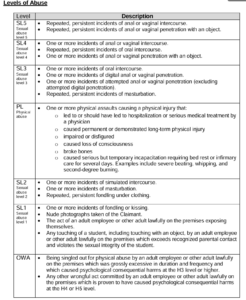
Fig. 4: Levels of abuse used by IAP Adjudicators to assess
the level of compensation
While researching for our podcast, there were IAP documents accessible at the courthouse in Toronto. They were draft reports created by the IAP Secretariat to report progress to the court. There was more information in those court documents than I’d ever seen about the IAP. There were statistics about IAP hearings and decisions broken down by age, gender, province and church denomination. There was also information about compensation amounts and the levels of abuse and harm proven in the claims.
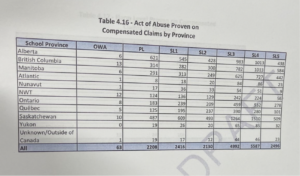
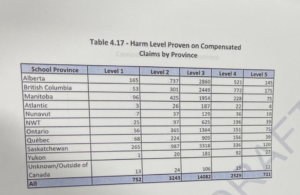
Fig. 5: Scans of tables found in IAP draft report
I learned that most of the compensated claims were designated as SL 4 (Fig.4) which was defined by:
SL4 – Sexual abuse level 4
-
- One or more incidents of anal or vaginal intercourse.
- Repeated, persistent incidents of oral intercourse.
- One or more incidents of anal or vaginal penetration with an object.
And the vast majority of claims that were compensated were found to be Harm Level 3 (Fig. 5) – “Continued detrimental impact”. Evidenced by:
-
- Difficulties with interpersonal relationships, occasional obsessive-compulsive and panic states, some post-traumatic stress disorder, occasional sexual dysfunction, addiction to drugs, alcohol or substances, a long term significantly disabling physical injury resulting from a defined sexual assault, or lasting and significant anxiety, guilt, self-blame, lack of trust in others, nightmares, bed-wetting, aggression, hyper-vigilance, anger, retaliatory rage and possibly self-inflicted injury.
When the IAP hearings were happening in our community, my dad was involved as a cultural support worker. My stepmother Norlaine said that after sitting with other Survivors during their hearings, he would come home drained. Sometimes he’d get a call in the middle of the night and he would go and sit with somebody who just needed to talk. In the weeks before his own hearing, he became more agitated and upset. She told me that about a week before his hearing was to take place, he broke down and told Norlaine that he couldn’t do it.
My father never received compensation through the IAP process. But his application form is part of the archive. And almost certainly, it will be lost after September 19, 2027. That’s when the records of nearly all of the 38,000 Survivors who applied for compensation from the IAP have been ordered to be destroyed by order of the Supreme Court of Canada.
Whenever I tell people that the most comprehensive archive of Survivor testimony from Indian Residential Schools is set to be destroyed, they react with disbelief and then confusion. The Supreme Court ordered the destruction of records relating to atrocities committed in Indian Residential Schools? How? Why? The answer is complicated and I’m actually working on a podcast about the case and the decision — but essentially it’s an issue of privacy. Survivors were promised confidentiality and the IAP did not obtain their consent to preserve their records.
The Supreme Court decision was made in 2017. It mandated a ten year window to allow for Survivors to “opt in” if they wanted their records preserved.
However, in ten years, only around 100 Survivors have applied to have their records kept with the National Centre for Truth and Reconciliation. The decision to preserve their records can only be made by Survivors.
Accountability and the Archive
When we couldn’t get my dad’s IAP record but were still looking for the priest who abused him, one of my former colleagues, Chantelle Bellrichard, had an idea. To understand what was happening at St. Michael’s, we could go back to the lawsuits that Survivors filed before the IRSSA. Between 14,000 – 20,000 lawsuits were filed by Survivors, mostly in the 90s and early 2000s, attempting to hold the government and churches accountable for abuse they endured in Indian Residential schools. It was the largest class action lawsuit in Canadian history, at the time. If we could find those documents, what would they tell us about abuse at St. Michael’s?
We filed Access to Information requests with Justice Canada and received 485 file numbers of lawsuits from Survivors of St. Michael’s. We then travelled to courthouses across Saskatchewan to access them. The court documents painted a shocking picture.
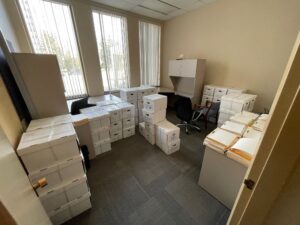
Fig. 6: Boxes of files at the Regina courthouse
We found more than 200 allegations of sexual abuse against 17 priests, 13 nuns and 15 staff members.
Many of the allegations were not a single incident but abuse that was ongoing, sometimes for months, even years. In our podcast, we named all of them:
| Anthony Duhaime |
Georges Chevrier |
Gilles Gauthier |
Denis Dubuc |
| Georges Latour |
Eugene Labonte |
Georges Roussel |
Armand Allard |
| Antonio Alberti |
Laurent Houde |
Ernest Lacombe |
Louis-Clement Latour |
| Lionel Dumont |
Armand Rodrigue |
Irenee Gauthier |
Toussaint Bouchard |
| Irene Lalonde |
Bernadette Lemay |
Brigitte Simard |
Lucienne LaFlamme |
| Laura Fortier |
Therese Gosselin |
Lucille Hudon |
Marie Rose Gauthier |
| Roseanne Roy |
Anna Gaudet |
Elodie Dery |
Marguerite Lajeunesse |
| Edna Marois |
|
|
|
Most of these allegations were never tested or proven in court because many of the claims were dropped so that survivors could participate in the IAP.
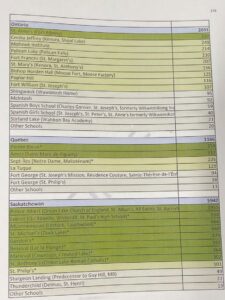
Fig. 7: Table from IAP draft report showing compensated claims by Indian Residential School
We knew that although we had uncovered a staggering level of abuse at St. Michael’s, it was not the full picture. In the IAP documents, we saw that 660 Survivors were compensated for abuse at St. Michael’s.
Early on in our investigation, after hearing that my uncle Ivan Cameron accused Father Gauthier of sexual abuse, I reached out to Ken Thorson, who was at the time, the head of the Oblates in Canada. The Oblates ran most of the Catholic-run Indian Residential Schools including St. Michael’s. When I first asked Ken Thorson about Gauthier, he said he’d never heard of any allegations of sexual abuse against him. After hearing his name several more times in interviews and court documents, I asked again, and Thorson told me that since we last spoke, he’d asked around to other priests and OMI staff and no one had ever heard of allegations against him.
One of the court documents we found from St. Michael’s was my uncle Ivan’s statement of claim where he alleged that he was brutally abused by Father Gauthier daily for years as a boy at St. Michael’s. I sent it to Ken Thorson. After that, Thorson wrote back with new information. He said that a review of legal records from Oblate-run residential schools revealed that Father Gauthier was named in 23 IAP decisions, and that 16 of those claims were deemed by the IAP to be credible allegations of sexual abuse against Father Gauthier. As far as we know, he has never been charged or investigated for any crimes relating to abuse at Indian Residential Schools. Gauthier died in 2024.
There were 140 Catholic priests who worked in residential schools and the Catholic Church knows how many of them were credibly accused, as they were sent every single claim made by Survivors through the IAP. Last December, I attended a gathering that included many Survivors. When the destruction of the IAP records came up, one of them addressed the room and said,
“Who is being protected by the destruction of these records? Not me.”
The Indian Residential School Records Project
Even after the podcast was released, I knew that I wasn’t done with the story. I had an incredible team and unprecedented support to tell the story of St. Michael’s, but it felt unfinished. I heard from so many other intergenerational survivors who said it felt like I was also telling their story. They had grown up with parents or grandparents who attended residential schools, but who never talked about it and had the same questions I did about what happened to our relatives at those institutions and how it shaped our lives. I realized how lucky I was that I was able to investigate my own story, but how unfair it was that so many other stories wouldn’t be.
What late Justice Murray Sinclair said in 2015 still echoes in my mind. As intergenerational survivors, we have all been affected by what happened in those schools and we should all have the right to truth.
So earlier this year, I started the Indian Residential School Records Project. Our goal is to try to replicate the work we did on the podcast but to go further — to create a new archive from the lawsuits Survivors filed before the Settlement Agreement. I’m collaborating with Kimberly Murray (now at Queen’s Law and former Executive Director of the TRC and Independent Special Interlocutor for Missing Children and Unmarked Graves), and the Yellowhead Institute, the School of Journalism and the Lincoln Alexander School of Law at Toronto Metropolitan University. We will be working with Survivors, family members and communities to decide on how to best preserve and share these sensitive records.
We’ve spent the last several weeks in courthouses in Toronto, Ottawa, and Cochrane, scanning over 70 boxes of court records related to Indian Residential Schools and it’s clear just how much truth there is left to uncover.
We are still learning so much about the experiences of children at Indian Residential Schools but even our initial research has raised some serious questions about the process surrounding the impending document destruction.
We are hoping that our work may help in the efforts others are making to reach Survivors to give them information about, and help to exercise the option, to preserve their records.
On September 30th, 2026, Yellowhead Institute hosted a special event on this topic, The Right To Truth: Protecting Indian Residential School Records featuring Kimberly Murray, Connie Walker, Marie Wilson and Stephen Kakfwi. Watch a recording of the event here.