
- About
- Research
-
-
- Special Reports & Features
- The Rematriation of Indigenous Place Names
- Braiding Accountability: A Ten-Year Review of the TRC’s Healthcare Calls to Action
- Buried Burdens: The True Costs of Liquified Natural Gas (LNG) Ownership
- Pretendians and Publications: The Problem and Solutions to Redface Research
- Pinasunniq: Reflections on a Northern Indigenous Economy
- From Risk to Resilience: Indigenous Alternatives to Climate Risk Assessment in Canada
- Twenty-Five Years of Gladue: Indigenous ‘Over-Incarceration’ & the Failure of the Criminal Justice System on the Grand River
- Calls to Action Accountability: A 2023 Status Update on Reconciliation
- View all reports.
- Special Reports & Features
-
-
- Yellowhead School
-
- The Treaty Map
- LIBRARY
- Submissions
- Donate
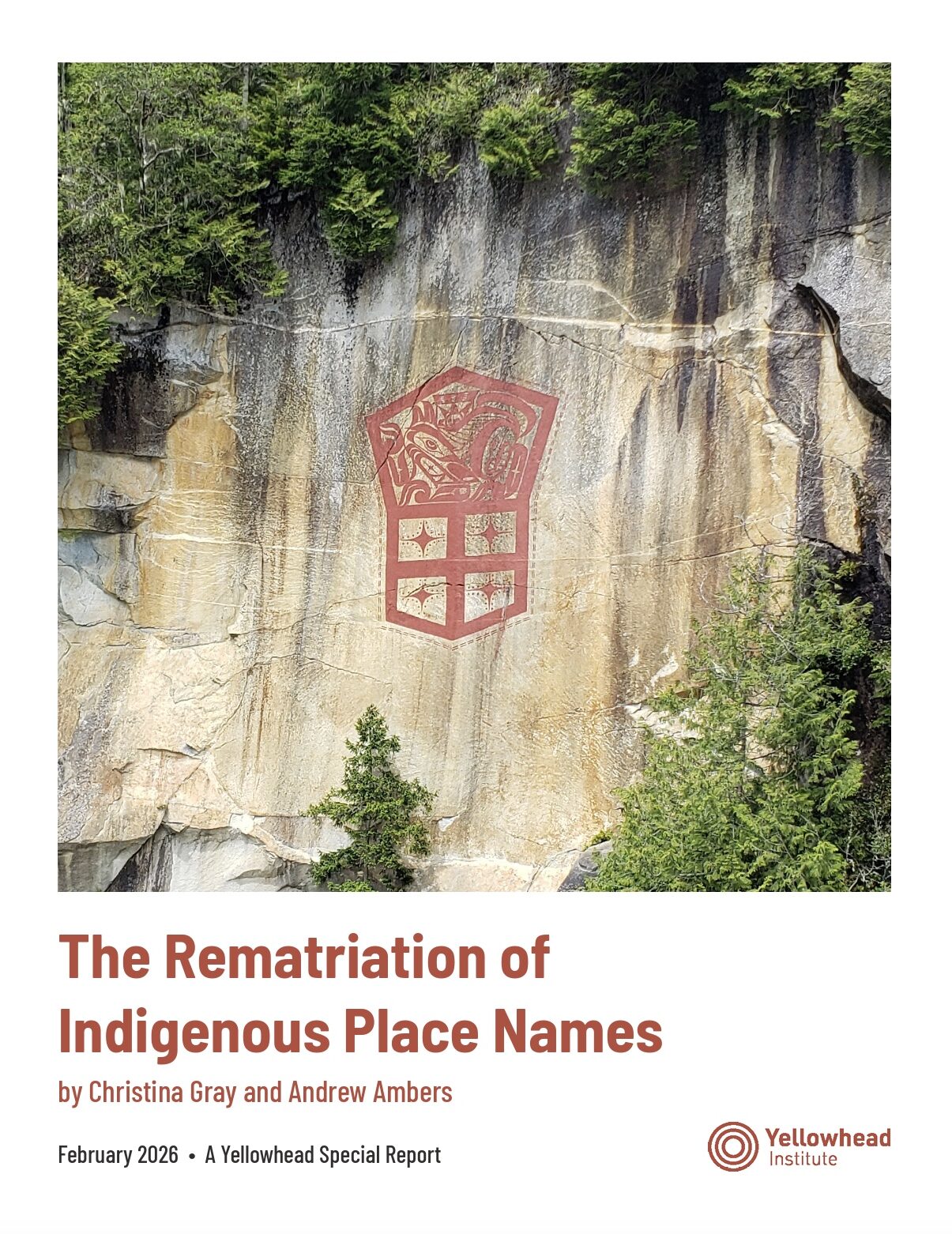
Across Canada and around the world, Indigenous peoples are working toward the reclamation and rematriation of Indigenous place names, rooted in their governance principles, values, and legal orders.
In The Rematriation of Indigenous Place Names, authors Christina Gray and Andrew Ambers illustrate how the rematriation practices shared among Dene, Ts’msyen, and Kwakwaka’wakw communities – truth-telling, gifting, and witnessing – can work to activate legal responsibilities, restore right relationships, and reaffirm
Indigenous laws.
Despite the myriad ways Canadian law may constrain or selectively recognize Indigenous legal authority, rematriation and place-naming are important corrective tools. In legal contexts where multi-jurisdictional legal systems overlap, intersect, and oftentimes conflict, place names offer remedies, rooted within Indigenous
legal orders.
This Special Report explores the process and outcomes of generating and
re-asserting (re-matriating) place names in a Ts’msyen, Dene, and Kwakwaka’wakw perspective, providing a resource to expand that work in B.C. and across
the country.
KEY QUESTIONS
Can Indigenous place names – and the processes to restore them – revitalize Indigenous law?
Indigenous Peoples’ choice to name and rename is deeply embedded in community-based decisions to reawaken responsibilities, rights, and jurisdiction. It is a process that is rooted in Indigenous legal orders.
- Christina Gray and Andrew Ambers