
Factsheet

The Second-Generation Cut-off: Status and Exclusion

The second-generation cut-off was introduced through the 1985 amendments to the Indian Act, also known as Bill C-31. While those amendments removed some of the sex-based discrimination in the Indian Act, it also created new forms of discrimination. The second-generation cut-off effectively denies status to any children who do not have full status parents. A

The Second-Generation Cut-off: Status and Exclusion Read More »

Bill S-2: A Brief Explanation

Bill S-2 is the latest attempt to address discrimination in the Indian Act. The Bill, introduced in the Senate, responds to court cases and the legacy of policies that have severed Indigenous identity, belonging, and kinship across generations; specifically, the practice of enfranchisement. While Bill S-2 takes important steps toward constitutional compliance, it is still

Bill S-2: A Brief Explanation Read More »

The Canada Company: Reconciliation Action Framework 2026:
“Building Relationships for a Shared Future”

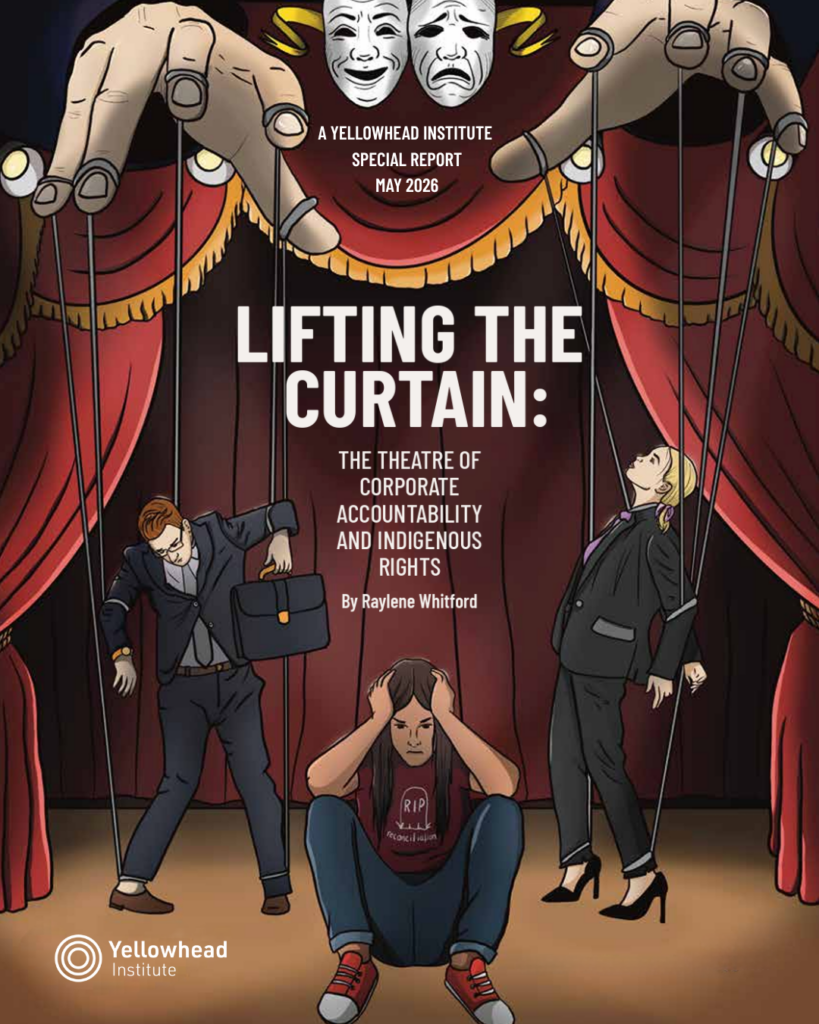
Drawn from the Yellowhead Special Report, Lifting the Curtain: The Theatre of Corporate Accountability and Indigenous Rights, this resource explains the often misleading narratives found in corporate disclosures, demonstrating how companies use these narratives of reconciliation to project accountability, while simultaneously undermining Indigenous jurisdiction.

The Canada Company: Reconciliation Action Framework 2026:
“Building Relationships for a Shared Future”
Read More »

Corporate Accountability by the Numbers: How do Canadian Corporations Talk about Reconciliation?

This resource is drawn from the Yellowhead Special Report, Lifting the Curtain: The Theatre of Corporate Accountability and Indigenous Rights. It spotlights an analysis of the 220 companies on the Toronto Stock Exchange (TSX) index between March and May of 2025 compiled from corporate websites, sustainability reports, Management’s Discussion and Analysis (MD&A), financial statements, and

Corporate Accountability by the Numbers: How do Canadian Corporations Talk about Reconciliation? Read More »

Killing Canada’s Most Colonial Legislation: A Short History of Attempts to End the Indian Act

In recent Canadian history, there has been a Prime Ministerial pre-occupation with removing the Indian Act. Every 10-20 years, from Liberal or Conservative governments, a new approach to breaking down the Act is introduced. While those approaches have differed by degrees, the philosophy has been remarkably similar through time and rejected by First Nations as

Killing Canada’s Most Colonial Legislation: A Short History of Attempts to End the Indian Act Read More »

The Right to Reclaim a Name: The Intersection of Indigenous and Crown Laws & Place-Naming Initiatives

From the Yellowhead Institute Special Report, The Rematriation of Indigenous Place Names, this resource illustrates the varied and uneven ways Canadian courts and state institutions have responded to Indigenous place-naming initiatives, at times affirming Indigenous legal authority and, in other instances, limiting or refusing its recognition altogether.    

The Right to Reclaim a Name: The Intersection of Indigenous and Crown Laws & Place-Naming Initiatives Read More »